How Movement Happens
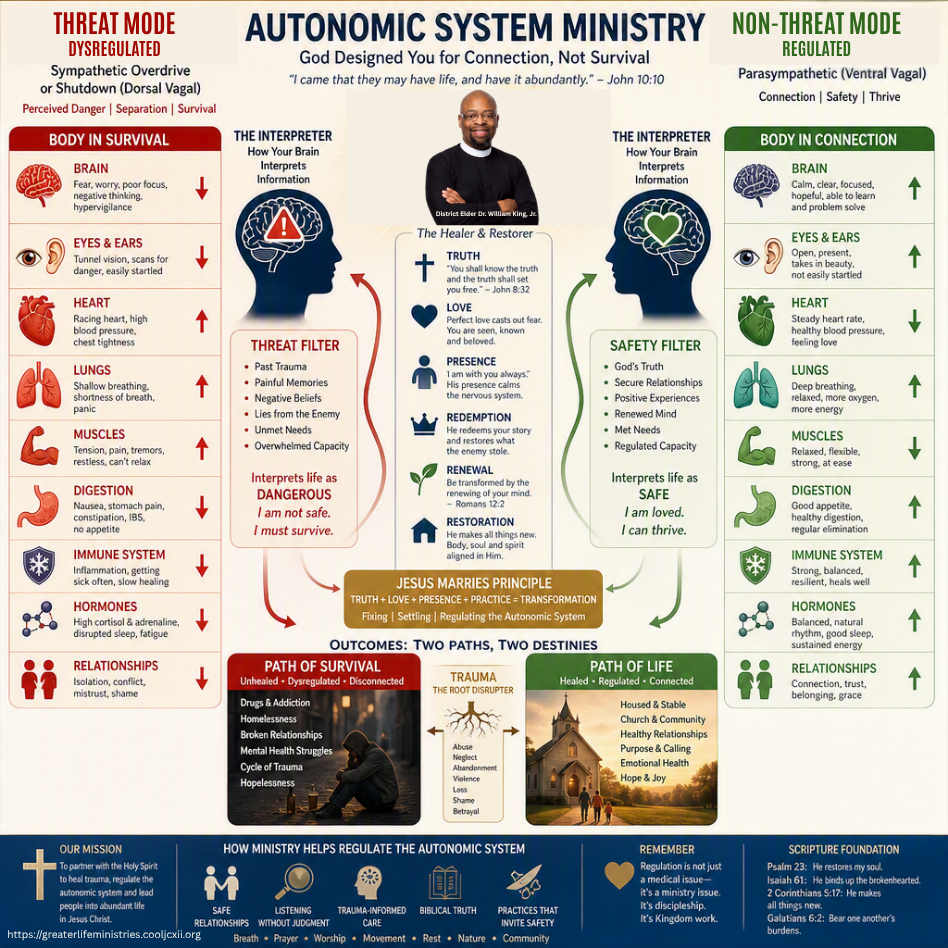
The autonomic system is the part of you that moves before you decide to move. It is the way your body breathes, tightens, softens, startles, and settles on its own. You don’t tell your heart to race when you’re afraid; it just does. You don’t command your breath to deepen when you feel safe; it simply happens. This quiet, constant motion is the autonomic system—your interior current that responds to reality underneath thought.
Autonomic system and the child‑pattern
The child‑pattern is how you experience the autonomic system. It is the felt side of those automatic movements. When something startles you and you jump, that jump is the child‑pattern riding the autonomic surge. When someone looks at you with genuine warmth and your body softens, that softening is the child‑pattern responding to safety. When joy rises in your chest before you can say why, that is the autonomic system expressing itself as child‑pattern. It is origin: your first, honest reaction before any story is told about it.
Autonomic system and the interpreter
The interpreter arrives after the autonomic system has already moved. You feel your stomach tighten, and then the interpreter says, “I’m anxious.” You feel your chest warm, and then the interpreter says, “I must be happy.” You jump at a sudden noise, and then the interpreter says, “That scared me.” The autonomic system reacts; the child‑pattern feels it; the interpreter explains it. When the autonomic system is calm, the interpreter has less fuel. When the autonomic system is triggered, the interpreter becomes louder—spinning stories, judgments, and looping thoughts around what the body has already done.
When the autonomic system is hijacked
Under intense stress or trauma, the autonomic system can fire so strongly that the interpreter feels out of control. Thoughts race, loop, and speak like another voice. The body reacts before you can catch it, and the interpreter scrambles to keep up, often misreading what’s happening. This is why certain experiences feel “possessed” or foreign: the autonomic system is surging, and the interpreter is riding that wave, producing commentary that doesn’t feel chosen. In this state, it’s easy to mistake the interpreter’s frantic voice for your true self.
When the autonomic system is aligned
When the autonomic system settles—breath slows, muscles release, heart rate steadies—the child‑pattern becomes clear and simple. You can feel what is actually happening inside you without the interpreter drowning it in noise. In this alignment, the interpreter can quiet down and stop trying to control everything. It can simply witness. This is often where prayer, presence, and genuine peace become possible: the autonomic system is no longer in a fight‑or‑flight storm, and the interpreter is no longer hijacking the moment with fear‑based narratives.
Why this matters
Seeing the autonomic system in the context of the child‑pattern and interpreter lets you separate reaction, feeling, and story. Your body’s first movement is not wrong; it is information. The child‑pattern is how you experience that movement. The interpreter is how you explain it. When you can tell them apart, you stop confusing your thoughts with your origin and your panic with your identity. You begin to notice: “My body reacted. My child‑pattern felt it. My interpreter is talking about it. I am more than all three.”