To build wisely in the West Coast region, we must first understand the place we are called to cultivate, to grow. This involves connecting with the unique identity, culture, spiritual terrain, and challenges that shape ministry in this region. Through this understanding, we’ve embarked on a period of focused research that has become the foundation for the work presented in this workshop. It represents an effort to align our ministry architecture with the cultural realities of West Coast ministries, ensuring that our strategies are contextually designed for the diverse soils in which we serve, regardless of where we are on the West Coast – from the rugged coastlines of Oregon to the sun-kissed deserts of Arizona, or from the bustling cities of the Pacific Northwest to the rural heartlands of the Southwest.
By God’s grace, I have been equipped with the insight, tools, and understanding necessary to facilitate this workshop. My purpose is to strengthen the Church’s capacity to govern wisely, evaluate fairly, and minister effectively across the diverse cultural and ministry landscapes of the West Coast region. As we begin, it is important to recognize the unique realities that shape the work of our churches and dioceses in this context.
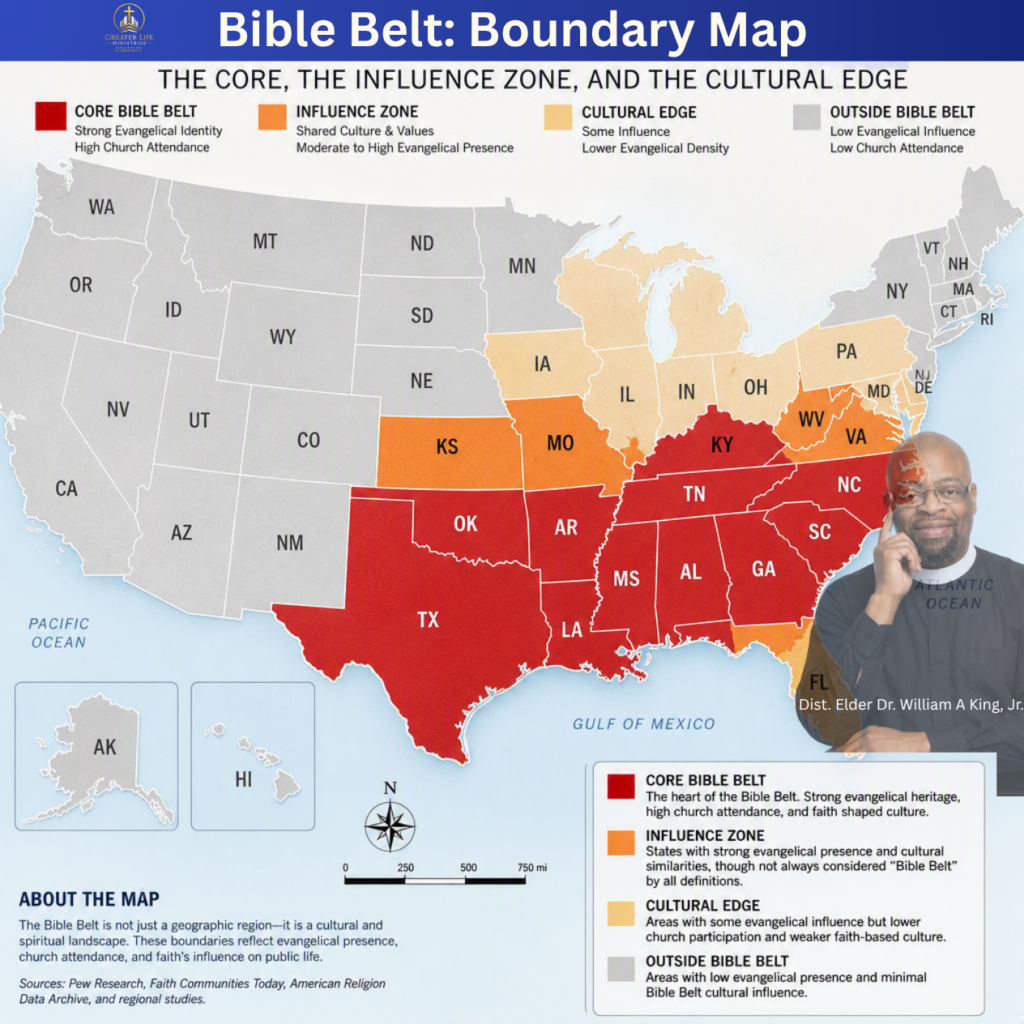
Our research at Greater Life Digital has shown that NOT every mission field is cultivated in the same way. Many of the standards by which ministry success is commonly recognized were developed in regions where church participation is higher, faith traditions are more deeply rooted, and people are naturally inclined to gather around religious life. What produces visible fruit in one field may not produce the same fruit in another.
The West Coast is a unique mission field. Here, many people are spiritually searching but disconnected from traditional church life. They are cautious of institutions, highly independent in their thinking, and often slow to build trust. Because of this, Kingdom work frequently develops through relationship, presence, consistency, and long-term investment before becoming visible in measurable ways.
For that reason, wisdom requires us to understand the field and it’s nature before we begin to judge the harvest. If you don’t account for these realities of the field, you may fail to recognize genuine fruit, discourage faithful laborers, and misunderstand what God is accomplishing among us.
The West Coast is simply a different field. Many people here are not connected to church life, are skeptical of organized religion, and take longer to trust both leaders and institutions. Communities are often spread out, church attendance is lower, and spiritual conversations usually develop more slowly. Because of that, ministry fruit does not always appear in the same way or on the same timeline that it might in other parts of the country.
If you measure every territory and field the same way, will not always see what God is doing. What looks like success in one region may not look the same in another. A pastor laboring faithfully in the West Coast may face challenges and realities that do not exist elsewhere. For that reason, you must understand the field before we judge the harvest.
This workshop is designed to provide a clearer understanding of the West Coast field. Many people in the West Coast have little or no connection to church life. Trust is built slowly. Relationships often develop over time. Church involvement is generally lower, and many people do not view spiritual authority in the same way that previous generations did. Understanding these realities is essential to understanding the labor taking place within this field.
Key Features of Hybrid Church-Mission Architecture
The West Coast is not resistant to faith. It is resistant to ministry models that assume trust, demand participation before relationship, or depend on constant visibility and excitement to maintain engagement.
Consequently, ministry in this region must be built differently.
Rather than gathering everyone into a single center of activity, hybrid church-mission architecture creates multiple pathways for connection, discipleship, and community. It connects the life of the church with the life of the neighborhood, the digital world, and everyday relationships.
Its strength lies not in larger events, but in deeper trust. Not in centralized control, but in adaptable networks. Not in performance, but in presence.
These characteristics form the foundation of a ministry model capable of engaging the unique cultural landscape of the West Coast. They are explored in greater depth throughout the course.
Aligning Ministry Metrics with the Mission Field
Every region reveals ministry effectiveness in different ways. Metrics that accurately reflect ministry health in one context may not fully capture what faithful and fruitful ministry looks like in another.
In many contexts, ministry growth is often evaluated through visible indicators such as attendance, event participation, platform influence, and large public gatherings. These measures can provide useful insights, but they do not tell the entire story of ministry effectiveness in every mission field.
The West Coast presents a different cultural environment. Here, ministry is often expressed through relational trust, long-term community engagement, digital and in-person connection points, leadership development, and sustained discipleship pathways. These forms of ministry are less visible than large events, yet they are often more reflective of how spiritual influence is established and maintained within the region.
As a result, evaluating ministry on the West Coast requires a broader framework that accounts for both traditional indicators and the realities of the local mission field.
Contextual Metrics for the West Coast
A more complete picture of ministry effectiveness includes measures such as:
Relational trust within communities
Digital-hybrid ministry engagement
Micro-program and outreach deployment
Community formation and belonging
Long-term discipleship outcomes
Leadership development and multiplication
Ministry consistency and territorial presence
Faithful engagement within secular environments
When ministry is evaluated according to the realities of its mission field, leaders gain a clearer understanding of what is genuinely bearing fruit and where future growth opportunities exist.
Overcoming Expectation
The West Coast region requires a unique approach to ministry that shifts the focus from event-based metrics to relational trust, identity-safe community formation, and digital-hybrid discipleship. To succeed, West Coast dioceses must demonstrate competency in skills that East-Coast leaders rarely need, such as ministry in secular environments, trauma-informed pastoral care, and digital-hybrid ministry architecture. A documented ministry architecture is essential to prove effectiveness, and long-term stability is more important than short-term visibility. By reframing the narrative as a frontier region with strategic value, the West Coast can position itself as a unique and valuable contributor to the broader church, rather than simply trying to fit into the expectations of the East Coast.
Shift the Metric: From Events to Ecosystems
The West Coast must clearly articulate that its ministry success cannot be measured by event size, emotional intensity, or platform performance. Instead, the region must present a new metric system built around:
Relational trust
Identity-safe community formation
Digital-hybrid discipleship
Micro-program deployment
Long-term stability
Leadership pipeline development
This reframes the conversation: the West Coast is not “underperforming”; it is operating in a different identity-terrain that requires different metrics. The region must teach the East Coast that ecosystem health is the correct measure, not event visibility.
Understanding the West Coast Mission Field
The challenge facing the West Coast is not one of commitment, faithfulness, or spiritual hunger. The challenge is one of context. Every mission field reveals different opportunities, different obstacles, and different pathways to discipleship. Effective ministry begins by understanding the field in which God has called us to labor.
The cultural realities of the West Coast require ministry leaders to develop competencies that may be less necessary in other regions. These include ministry within highly secular environments, identity-sensitive pastoral engagement, digital and in-person discipleship pathways, and the patient cultivation of relational trust. In this environment, lasting influence is often established gradually through consistent presence, faithful service, and meaningful relationships.
For this reason, ministry effectiveness cannot be understood solely through moments of visibility. The work of the gospel is often revealed through community formation, discipleship development, leadership cultivation, and long-term spiritual stability. A documented ministry architecture helps make this work visible while providing a framework for growth and accountability.
The West Coast should therefore be viewed not as a difficult region to manage, but as a strategic mission field that offers unique opportunities for apostolic ministry in the twenty-first century.
Measuring What Matters
Every ministry context requires measurements that reflect the realities of the field. While attendance, conferences, special services, and public gatherings can provide useful indicators of activity, they represent only part of the picture.
On the West Coast, ministry health is often revealed through different forms of fruitfulness:
Relational trust within communities
Identity-safe environments for exploration and growth
Digital-hybrid discipleship pathways
Community-based ministry initiatives
Long-term spiritual formation
Leadership development and multiplication
These measurements do not replace traditional ministry indicators. Rather, they complement them by providing a fuller understanding of how the gospel is taking root within this particular mission field.
The goal is not to reduce ministry to numbers, nor to compare one region against another. The goal is to recognize and cultivate the forms of fruitfulness that emerge within the field God has given us. When ministry is evaluated according to the realities of its mission context, leaders can make wiser decisions, steward resources more effectively, and build ministries that remain faithful for generations.
Developing the Competencies Required by the West Coast Mission Field
Every mission field requires its own set of ministry competencies. The cultural realities of the West Coast call leaders to develop strengths that extend beyond traditional ministry models and equip them to engage people within increasingly complex social and spiritual environments.
Among these competencies are:
Ministry within secular and post-Christian settings
Trauma-aware pastoral care
Digital and hybrid discipleship systems
Scalable community-based ministry models
Identity-sensitive communication
Relational community engagement
These are not alternative approaches to ministry. They are essential competencies for effective ministry within the West Coast mission field. As leaders develop these capacities, they become better equipped to reach communities that may not respond to more traditional patterns of engagement.
Building a Documented Ministry Architecture
Throughout Scripture, God’s work was not only experienced but also recorded, communicated, and passed to future generations. In the same way, ministry systems should be clear, transferable, and sustainable.
A healthy ministry architecture documents the pathways through which discipleship, leadership development, and community formation take place. This may include:
Hybrid church-mission frameworks
Digital discipleship pathways
Community outreach models
Community formation practices
Strategies for ministry engagement within secular environments
Documentation provides clarity for leaders, consistency for ministries, and continuity for future generations. It allows a ministry to move beyond individual effort and become a repeatable system that can be strengthened, evaluated, and reproduced over time.
Demonstrating Long-Term Fruitfulness
The work of the Kingdom is rarely measured by a single moment. Scripture consistently points us toward endurance, faithfulness, and the fruit that emerges through sustained labor.
In the West Coast context, ministry health is often reflected through:
Long-term discipleship relationships
Stable and growing communities
Consistent engagement across digital and physical spaces
Faithful pastoral presence
The development of future leaders
These indicators reveal the gradual yet lasting impact of gospel ministry. They highlight the strength of what has been cultivated over time rather than the visibility of a particular moment or event.
The West Coast as a Strategic Mission Field
The West Coast represents one of the most significant mission fields in North America. Its diversity, mobility, innovation, and cultural influence create both challenges and opportunities for apostolic ministry.
Effective ministry within this environment requires:
Adaptability
Innovation
Relational trust-building
Digital engagement strategies
Community-centered ministry models
Contextual leadership
Rather than viewing the region through the lens of limitation, the Church should view it as a strategic field of labor that requires intentional ministry architecture and thoughtful stewardship. As the Church develops models capable of serving this environment effectively, the lessons learned will strengthen ministry efforts far beyond the boundaries of the West Coast itself.contributions, rather than trying to fit into the expectations of the East Coast.
West Coast to assert its own strengths and contributions, and to seek recognition and support as a distinct and important part of the church’s landscape.
Leading Effectively in West-Coast Dioceses
This workshop equips church leaders to understand the cultural, social, and ministry realities that shape dioceses across the West Coast. Participants will explore how mission fields influence ministry methods and why leadership approaches that thrive in one region may require adaptation in another.
The goal is not to replace apostolic principles, but to apply them wisely within the unique realities of the West Coast mission field.
Understanding the Ministry Context
Every region possesses its own patterns of community, communication, and spiritual engagement. Effective leaders recognize these realities and adjust their ministry strategies accordingly.
Many communities throughout the West Coast are characterized by:
High levels of cultural diversity
Distributed patterns of community life
Increasing secularization
Individualized spiritual journeys
Digital-first communication habits
Lower institutional trust
These realities shape how people form relationships, engage faith communities, and respond to ministry initiatives.
Training Insight
The mission of the Church remains unchanged. What changes are the methods required to engage different mission fields effectively. Wise leaders learn to distinguish between eternal principles and contextual practices.
Measuring Ministry Faithfully
Healthy ministry assessment begins with understanding what faithful fruitfulness looks like within a particular context.
While attendance, special events, conferences, and large gatherings can provide useful indicators of activity, they represent only one aspect of ministry health.
Within many West-Coast communities, ministry fruitfulness is often revealed through:
Relational trust
Consistent discipleship engagement
Digital participation
Community influence
Leadership development
Long-term pastoral presence
Training Insight
Leaders should evaluate ministry according to the realities of the field in which they labor. Effective assessment seeks to identify genuine fruitfulness rather than assume that every region will produce identical outcomes.
Essential Competencies for West-Coast Ministry
Identity-Aware Leadership
Many West-Coast communities respond positively to leadership that demonstrates:
Authenticity
Clarity
Consistency
Humility
Relational presence
Such leadership creates environments where individuals can explore faith, develop trust, and grow within Christian community.
Relational Trust Formation
Trust is often the doorway through which ministry influence emerges.
Rather than developing primarily through events or programs, trust is frequently established through:
Consistent pastoral presence
Meaningful relationships
Community engagement
Long-term reliability
Digital-Hybrid Ministry
Digital engagement has become a permanent feature of ministry life.
Effective leaders understand how to integrate:
Digital discipleship
Online communication
Hybrid gatherings
Digital resource distribution
Ongoing pastoral connection
Digital ministry is not a replacement for personal ministry. It is an additional pathway through which people can be discipled and supported.
Community-Based Ministry Models
In many West-Coast communities, ministry grows through smaller and more adaptable forms of engagement.
Examples include:
Small discipleship groups
Community care initiatives
Neighborhood-based outreach
Specialized support ministries
Digital fellowship networks
These approaches create multiple points of connection and participation.
Ministry Within Secular Environments
Many West-Coast communities require leaders to engage individuals who possess little religious background or limited familiarity with church culture.
The goal is not to adapt the message of the gospel. The goal is to communicate and embody that message effectively within the environment where people live.
Adapting Leadership Posture
From Platform to Presence
West-Coast ministry is often strengthened more by consistent presence than by public visibility.
Leaders who demonstrate reliability, accessibility, and relational investment frequently create deeper and more lasting influence than those who depend primarily upon platform-driven ministry.
From Events to Discipleship Ecosystems
Events can create moments of inspiration. Sustainable transformation usually occurs through ongoing discipleship relationships.
Healthy ministry ecosystems include:
Community formation
Leadership development
Discipleship pathways
Digital engagement
Pastoral care systems
From Attendance to Engagement
Attendance remains important, but it does not tell the entire story.
A fuller picture of ministry engagement includes:
Participation
Connection
Discipleship
Service
Community involvement
Leadership growth
From Intensity to Trust
Long-term ministry influence is most often established through trust.
Communities flourish when leaders create environments that are:
Welcoming
Clear
Honest
Respectful
Relationally grounded
Final Reflection
The West Coast should not be viewed as an exception to apostolic ministry. Rather, it is a significant mission field that calls for thoughtful leadership, patient discipleship, and faithful adaptation. Leaders who understand the realities of the field are better equipped to proclaim the same gospel, build the same Church, and fulfill the same apostolic mission within a distinct cultural environment.stry strategies that resonate with the region’s needs and values. This approach recognizes that the West Coast operates in a distinct environment, shaped by factors such as individualism, diversity, and low institutional trust.
The Need for Region-Specific Ministry Formation
The dioceses of Region XII serve some of the most diverse ministry environments in the Church. Together they encompass frontier communities, rapidly growing metropolitan regions, secular populations, geographically dispersed congregations, Indigenous communities, island cultures, and highly mobile populations.
Because of this diversity, ministry formation in Region XII must prepare leaders for realities that differ significantly from those found in more established and institutionally dense regions of the Church. Effective leadership requires more than administrative ability. It requires the wisdom to understand a mission field, discern its unique opportunities, and faithfully apply apostolic principles within its context.
California
California calls for leaders who can minister within highly diverse and spiritually complex environments.
Effective leaders learn how to build community among people whose spiritual journeys are often individualized and self-directed. They must cultivate trusted relationships, establish sustainable discipleship pathways, and create ministry structures that extend beyond traditional gathering models.
The ministry opportunity in California is not simply to gather people, but to form communities of faith within a culture that highly values personal autonomy and individual identity.
Washington
Washington calls for leaders who can cultivate faith communities within one of the most secular regions of the nation.
Ministry success often depends upon patient relationship-building, long-term pastoral presence, and the creation of communities where people can encounter authentic Christian witness. Leaders must be comfortable serving in environments where institutional trust is low and spiritual engagement may develop gradually over time.
The ministry opportunity in Washington lies in demonstrating the gospel through consistency, presence, and faithful service.
Alaska
Alaska calls for leaders who understand the realities of distance, isolation, and community resilience.
Ministry often requires creative approaches to pastoral care, leadership development, and discipleship across vast geographic territories. Leaders must build systems that sustain spiritual life between visits while strengthening local leadership within remote communities.
The ministry opportunity in Alaska lies in creating durable ministry structures capable of serving scattered populations without sacrificing pastoral connection.
Hawaii
Hawaii calls for leaders who understand the importance of culture, community, and relational continuity.
Ministry must often bridge multiple islands while honoring local identity and preserving meaningful relationships across geographic separation. Effective leadership requires humility, cultural awareness, and a deep commitment to community life.
The ministry opportunity in Hawaii is found in building ministries that reflect both hospitality and belonging while maintaining strong connections throughout the islands.
Oregon
Oregon calls for leaders who can engage spiritually interested populations that may have little connection to traditional church structures.
Trust, authenticity, and consistent presence often become the foundation for ministry effectiveness. Leaders must be willing to build relationships before expecting participation and create environments where spiritual exploration can mature into discipleship.
The ministry opportunity in Oregon lies in reaching people who are seeking meaning yet remain cautious toward institutions.
Arizona
Arizona calls for leaders who can respond to rapid growth, demographic change, and cultural diversity.
Communities are often expanding quickly, creating opportunities for new ministry initiatives, leadership development, and church planting efforts. Leaders must be able to serve established communities while also preparing for emerging mission fields.
The ministry opportunity in Arizona is found in stewarding growth wisely while maintaining strong discipleship foundations.
Colorado
Colorado calls for leaders who can minister within highly mobile communities where identity and belonging are often shaped by movement, transition, and personal exploration.
Effective leaders must create pathways for connection, discipleship, and leadership development that remain stable even as communities continue to change. They must balance innovation with long-term spiritual formation and institutional continuity.
The ministry opportunity in Colorado lies in building networks of ministry that provide both flexibility and stability in a rapidly changing environment.
Training Insight
Although these dioceses differ significantly from one another, they share a common reality: each requires leaders who understand how to serve complex mission fields with patience, wisdom, and apostolic vision.
The question is not whether one ministry environment is more difficult or more important than another. The question is whether leaders have been formed to understand the field in which God has called them to labor. Faithful ministry begins when leaders learn to read the terrain, discern the needs of the people, and apply unchanging apostolic truth within changing cultural realities.